Industrial · Solar PV + Hybrid Control
Kapeeka Factory Mega-Solar Plant
A megawatt of clean power for a factory that never stops.
- Location
- Kapeeka, Nakaseke District
- Scale
- 1.2 MWp
- Commissioned
- 2024
- Installed capacity
- 1.2 MWpInstalled capacity
- Daytime load offset
- ~65%Daytime load offset
- CO₂ avoided per year
- ~1,800 tCO₂ avoided per year
- Modelled payback
- 4.5 yrsModelled payback
Figures are representative of work delivered in this sector and are rounded. Full project documentation available on request.
01 — Problem statement
The problem we were asked to solve
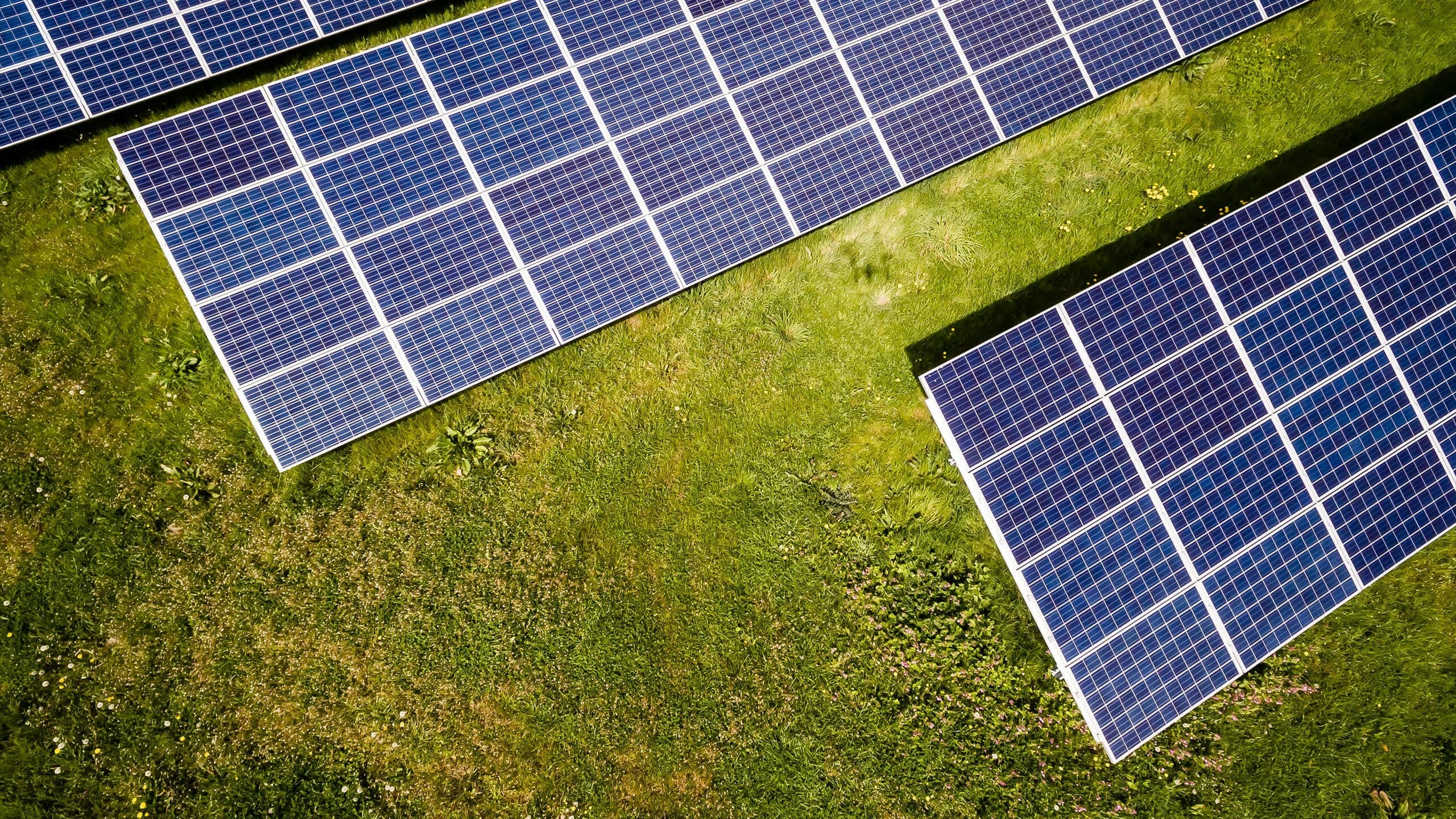
A 1.2 MWp rooftop-and-ground solar plant for a manufacturing facility at Kapeeka, engineered to carry the bulk of daytime production load, slash diesel dependence and hold the line through grid instability.
The manufacturing facility at Kapeeka runs the way industrial plants must — continuously, with processes that cannot simply be paused when the power wavers. That reality had made energy one of its largest and least predictable costs. The grid supply to the Nakaseke industrial area, while present, was neither fully reliable nor cheap: voltage dips and outages interrupted sensitive production lines, and every interruption meant either lost output or an immediate switch to standby diesel generation. Those generators were the plant’s insurance policy and its financial wound at once — running them through grid gaps consumed fuel at a punishing rate, and the maintenance burden of heavy-duty gensets on near-constant standby was significant. On top of the diesel, the grid tariff itself was climbing, and because so much of the factory’s consumption fell in expensive daytime hours, the bill grew heavier every year. Management faced a compounding problem: energy costs that ate into competitiveness, a carbon footprint that increasingly mattered to their own customers, and a supply that was not stable enough to protect the very production it powered. They needed power that was simultaneously cheaper, cleaner and steadier — and at a scale most solar installers in the region had never attempted.
02 — Our solution
What we engineered
We treated Kapeeka as an industrial energy project, not simply a solar installation, because at this scale the integration matters as much as the panels. The work began with a detailed study of the factory’s load: interval metering across production shifts to establish the true daytime demand, its peaks, and how it mapped against the tariff. That analysis showed that a large share of consumption sat squarely in daylight hours — the ideal profile for solar to attack. We engineered a 1.2 MWp hybrid plant that combined a very large rooftop array, using the factory’s extensive roof, with a ground-mounted field to reach the capacity the roof alone could not. The heart of the design was the control system: an intelligent hybrid controller that prioritises solar generation first, draws from the grid second, and calls on the diesel generators only as a last resort, orchestrating the three sources so that production never sees an interruption during changeover. We sized the system against measured production load rather than optimistic nameplate figures, using tier-1 monocrystalline modules and central inverters rated for continuous industrial duty, with remote monitoring so performance could be verified against the model every single day. Every major component was selected for serviceability and long-term parts availability, because a megawatt plant is a twenty-year asset and the wrong sealed component can strand it.
On site
03 — Implementation
How we delivered it
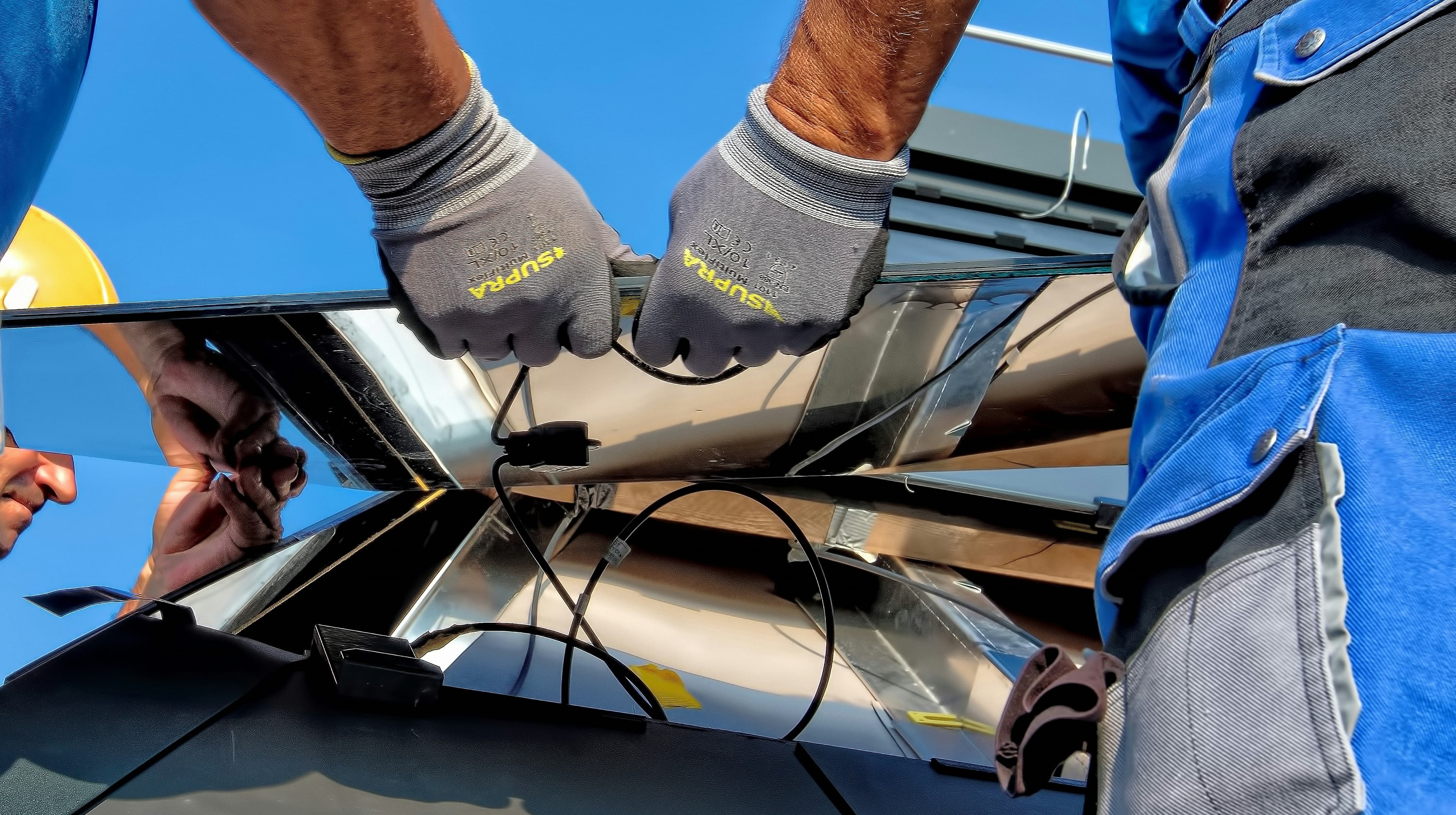
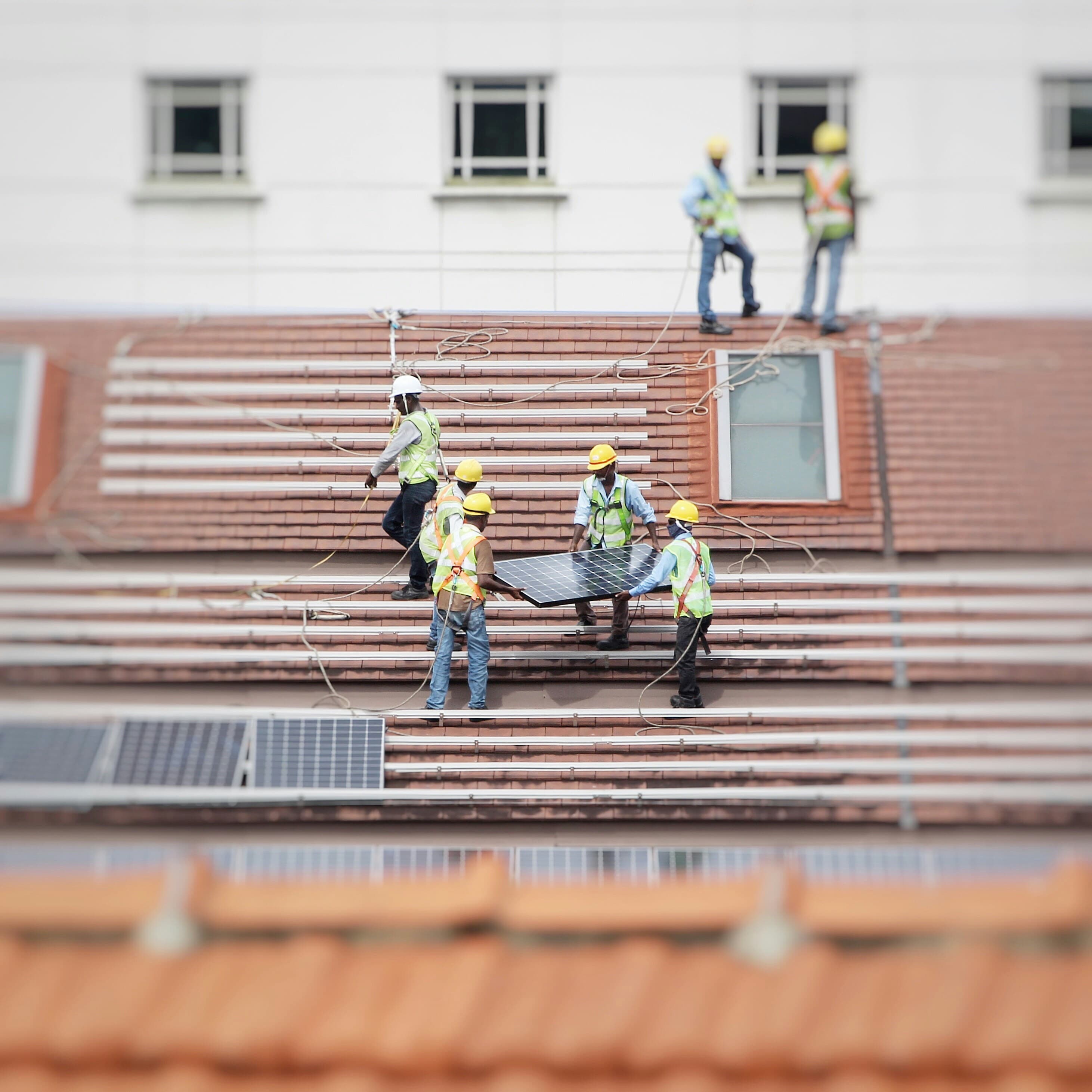
A megawatt-class plant on a live factory demanded a phased build that never once halted production. We began with structural assessment and reinforcement of the rooftop, confirming it could carry the array and the wind loads, while in parallel preparing the ground-mount field with foundations and fencing. Mounting and module installation proceeded roof-section by roof-section, deliberately sequenced around the factory’s operating areas so that no production zone lost access or power during the works. The DC infrastructure — combiner boxes, string protection, cable runs — was installed and tested in isolation before any connection to the plant’s electrical system. The most delicate phase was integrating the hybrid controller with the existing grid connection and generator sets: this we staged carefully, commissioning the solar plant into the factory’s distribution under controlled conditions, verifying the changeover logic between solar, grid and diesel, and confirming that a grid dip would be ridden through without a production interruption. Protection settings and grid-connection approvals were managed alongside the utility. Throughout, our engineers worked to industrial safety standards on an operating site, and we commissioned the plant against the modelled yield, running it through several full production days to confirm real-world output matched design before handover.
Engineering detail
- Combined rooftop and ground-mount to reach megawatt scale
- Hybrid controller prioritises solar, then grid, then generator
- Sized against measured production load, not nameplate
- Central inverters with remote performance monitoring
- Engineered for continuous industrial duty
04 — Results
What it delivers now
The Kapeeka plant now generates at genuine industrial scale, and the impact on the factory’s operations and economics has been substantial. Solar carries roughly two-thirds of the daytime production load, displacing the most expensive tariff hours and dramatically reducing the volume of grid electricity the factory buys during daylight. Diesel run-hours have fallen sharply — the generators have returned to being true standby plant rather than a daily expense — cutting both the fuel bill and the maintenance burden that came with near-constant running. The factory’s energy cost per unit of output has dropped substantially, turning a volatile, rising line item into a largely fixed and predictable one, which is precisely what a manufacturer needs to price competitively. The carbon reduction is significant and verifiable — on the order of 1,800 tonnes of CO₂ avoided each year — which matters increasingly to the plant’s own customers and to its reporting obligations. Critically, the hybrid control has delivered on continuity: grid instability that once threatened production is now absorbed by the system, and the changeover between sources is invisible to the lines. Modelled payback sits around four and a half years, and shortens with every tariff increase. For a manufacturer competing on cost, converting a large and volatile operating expense into a fixed, financed asset is a strategic gain as much as an environmental one.
05 — Current status
Where it stands today
The plant is fully operational and has become the anchor of the factory’s energy strategy. Performance is monitored remotely against the original yield model, with our team reviewing output continuously and flagging any underperformance — a soiled array section, a string fault, an inverter alarm — within days rather than at the end of a billing period, so lost generation is caught and recovered quickly. The facility is maintained under a full operations-and-maintenance agreement: scheduled preventive servicing of modules, inverters and the control system, module cleaning tuned to the dust conditions of the industrial park, and a rapid-response arrangement backed by a stock of genuine spares for the critical inverters and controllers. Because the system was sized against measured load, it is performing in line with expectations rather than over- or under-delivering. Management is now evaluating a battery energy storage addition that would let the plant shift surplus daytime solar into the evening shift and further reduce grid dependence, and we are modelling that expansion against the plant’s actual generation and load data. Kapeeka stands as one of the largest privately owned solar installations of its kind in the region — a working proof that megawatt-scale renewable power belongs in industry.
Ready to lower your energy bill?
Get a free assessment and a costed proposal with a clear payback period.